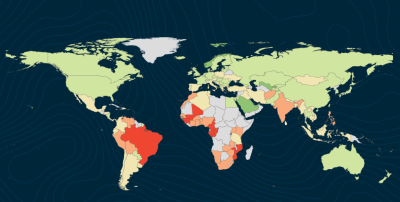
Currently, the world, the times, and history are undergoing unprecedented changes, presenting humanity with challenges that must be taken seriously. Humanity has not yet emerged from the shadow of the global pandemic, and now faces new traditional security risks; the global economic recovery remains fragile and weak, compounded by the widening development gap; governance deficits such as those related to climate change remain unfilled, while new challenges like digital governance confront us.
Generally speaking, a world with regularity and order is considered a safe world, and the understanding of the world's regularities is seen as stemming from the motivation of seeking security. Hidden within this modern interpretation of "security" lies the truth of aggression and the desire for conquest. As Bacon revealed long ago, to conquer nature, one must first understand nature. Behind the search for regularity lies the will to conquer. In a world rife with the will to conquer and aggression, where is security? Every war of aggression in history has had an aggressor's pretext for maintaining their own security. After humanity's conquest of the sacred earth under the pretext of seeking its own security, are we truly more secure?
The security situation is becoming increasingly complex
Security is the prerequisite for development, and humanity is an indivisible community of shared security. As international relations deepen, the international community should ideally be more interdependent and integrated, forming a shared security community. However, the reality is that the current global security situation is more complex than ever before, primarily characterized by significant fragmentation.
- Fragmentation of Global Security Concepts.
Security concepts represent each country's understanding of security threats and its approach to achieving security cooperation. Differences in development levels among countries and regions lead to varying security needs, widening the gap in global security perceptions and making it more difficult to reach a unified global consensus on security.
- Fragmentation of Global Security Governance Mechanisms.
While international organizations such as the United Nations play a crucial role in global security governance, various regional security organizations and alliances are equally important components. However, conflicts arise between these organizations, limiting the effectiveness of the overall security mechanism.
- Fragmentation of the Global Security Situation.
Currently, the security situation varies significantly across regions. Some regions face severe traditional security challenges, intense inter-state conflicts, and devastating civil wars; while others have enjoyed years of peace and are now more focused on domestic non-traditional security issues. 4. Increased Diversification of Security Actors.
Previously, sovereign states were the primary actors influencing global security and integral components of existing global security governance mechanisms. With the continuous evolution of the international landscape, the influence of various non-state actors on global security has increased. For example, multinational corporations, religious groups, NGOs, and even some prominent individuals all exert significant influence on global security affairs. This diversification of global security actors further underscores the necessity of building a multi-stakeholder security governance mechanism.
Intertwined Challenges
Relatedly, the post-Cold War world peace dividend is showing diminishing marginal returns, and global security challenges are constantly increasing, mainly in five aspects.
- The security risks of technological development and application leading to uncontrolled technology are on the rise.
The development and application of technology inherently possess unsettling aspects. Distrust between some countries and disorderly competition among enterprises further increase the difficulty of corresponding control. If certain advanced technologies fall into the hands of criminals, criminal groups, or countries that do not abide by the UN Charter and international law, they will pose a significant threat to human society.
- Security concerns stemming from the proliferation of weapons of mass destruction persist.
While the international community has established a series of treaties to limit weapons of mass destruction, this has not completely eliminated the risk of their proliferation. Currently, some biological and chemical weapons still pose a risk of illegal use.
- Nuclear security risks in the international community have increased.
Major powers are caught in a stalemate regarding the limitation of global nuclear strategic forces, leading to a deadlock in resolving the global nuclear proliferation issue. Nuclear deterrence and confrontation between major powers occur from time to time, and some non-nuclear states are showing increased interest in acquiring nuclear weapons. All of these factors contribute to regional and international tensions.
- Terrorism and transnational crime continue to emerge.
Currently, the breeding ground for terrorism remains in the international community. Terrorist activities stemming from ethnic politics, religious conflicts, and wealth inequality occur frequently. With the support of advanced technology, terrorist activities have become more covert and rapid. As globalization develops, the flow of people, capital, products, and technology between countries is constantly increasing, leading to a rise in various transnational crimes such as financial fraud, money laundering, smuggling, and drug trafficking.
- Facing the comprehensive risks posed by the global pandemic.
The COVID-19 pandemic has exacerbated trade protectionism and increased the risk of an economic crisis. Many countries are experiencing rising unemployment, widening income inequality, and food shortages, leading to accumulating pressure on individuals and groups and a significant increase in various social conflicts. Political and security risks are also accumulating, with some regions and countries with relatively weak governance already experiencing social instability and political turmoil. As the international community enters the post-pandemic era, the governance capabilities of governments will face even more severe tests.
- Increased risks of geopolitical confrontation and strategic competition among major powers.
Intensified competition among major powers has triggered geopolitical crises, having an extremely negative impact on international security. Influenced by this competition, the United States and other countries are continuously strengthening their alliance systems. A more far-reaching impact is that the balance of global strategic power may be disrupted, and the advancement of global disarmament and arms control will face greater resistance.